Tuesday December 3rd, 2013 continued.

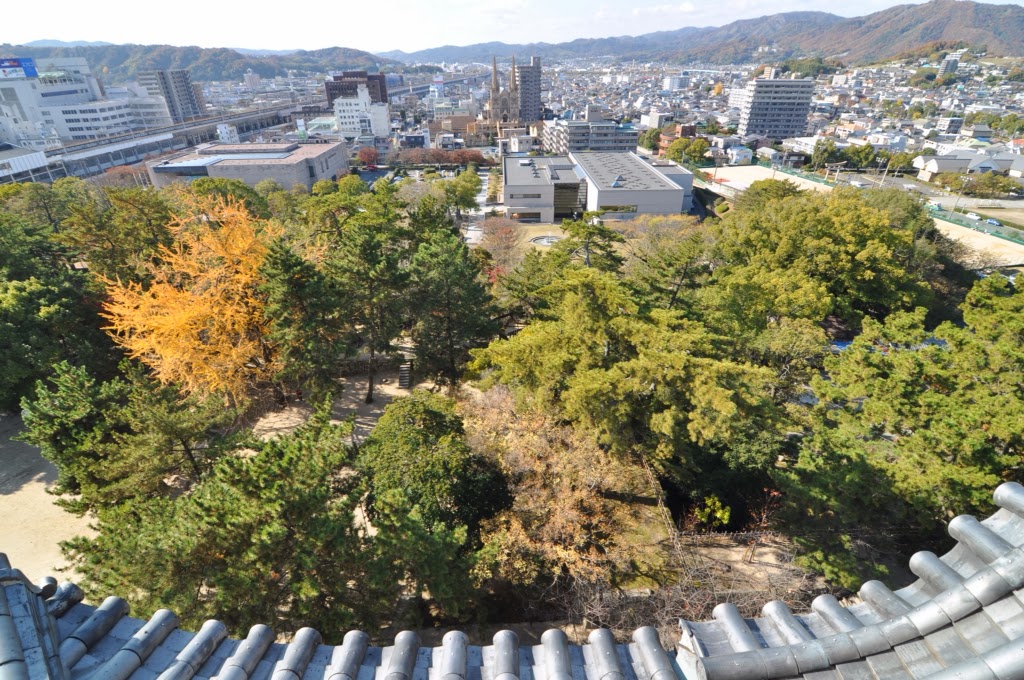
Here is Dohi and Goto, touring us around Tomonoura, a charming quiet little fishing port with a history that dates back 1000 years.

A Shinto temple with it's host...

...the dragon.


Patchwork roof tiles.

The harbour.

Our happy happy friends...

Lots of narrow old streets lined with traders shops and homes.

Narrow but possible to pass if you drive a small Japanese car. No wonder they are so popular around these parts...

We love the timber window screens. In traditional Japanese architecture, wooden lattice windows made with removable vertical slats serve as one of a series of layers easing the transition between indoors and out. And wouldn't you know it, Japanese traditions inspired the work of American architect Frank Lloyd Wright who also used slatted window treatments.


Segue...

You may have noticed in some of our previous blogs that the exterior timber walls of some old Japanese buildings looks black, as if it had been burnt. That's because they have been burnt. The ancient Japanese art of Shou Sugi Ban or burning actually makes the timber last longer and you never need to paint it... And it looks great . The process involves charring the Cedar or Cyprus cladding, cooling it, cleaning it, and finishing it with a natural oil before it is attached to the frame.


This finish is simply called rust. It has a certain wabi sabi style to it don't you think?

And this one, we'll, is called neglect...

Special sake in Tomonoura, called Homeisyu, which is made from natural remedies. Free tasting available... Very nice.
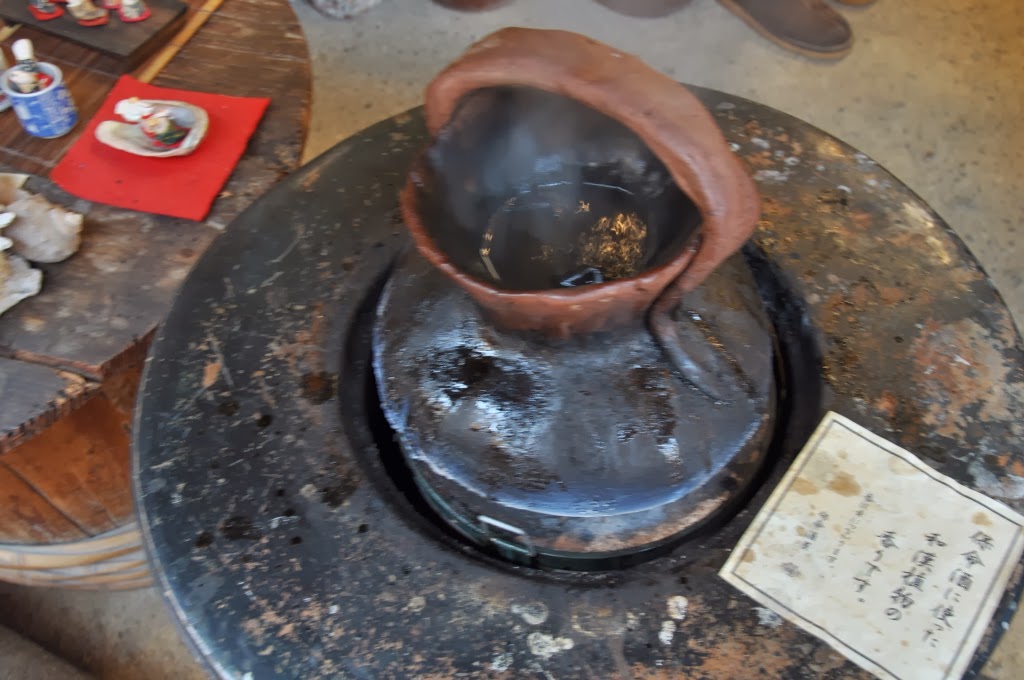
Sake warming.


Joya-you, the night lamp, and some stonework and stepped pier at the Tomo Port have been left as they were.


Fisherman's home. Friendly people.

They even let Alex help with the catch.

The brother in the middle is a metre reader. He put us on his blog this very evening so the least we can do is reciprocate...


These guys were barbecuing octapus by the side of the road. They insisted we have some.... And they even gave Alex a beer... Pretty hospitable...


So hospitable they even have a visitors book... Who knew?

Just who is running these temples?


A delicious Japanese feast.

Meet Akizumi, Dohi's roommate. He brought a Japanese 3 stringed instrument called a shamisen along to play for us.


It's played with a plectrum called a bachi.


Back row; me, Hirohisa Dohi, Akizumi, Hideaki and Goto
Front row; Rei-na, Alex and Toshie
The end of another beautiful day.
Lloydnalex